September 7, 2025 • min read
How to maintain muscle loss during weight loss
Discover 5 proven ways to maintain muscle during weight loss. Learn why movement and nutrition protect strength, energy, and long-term outcomes.
Written by

Head of Clinical Strategy, Sword Move
Protecting muscle is a critical weight loss goal
Losing weight often feels like progress. The number on the scale drops, clothes fit better, and motivation climbs. But if your plan isn’t protecting muscle retention at the same time, that progress may not last. Most people focus on pounds lost. But few stop to ask what kind of weight they’re actually losing.
Without the right strategy, weight loss doesn’t just reduce fat. It can also reduce lean muscle mass, the very tissue that keeps you strong, stable, and metabolically healthy. This is especially common in programs that rely on calorie restriction alone or medications like GLP-1s that suppress appetite¹.
The problem with losing muscle is clear. Less muscle means a slower metabolism, lower energy, and a higher risk of regaining fat². Without building habits of regular movement, you face the risk of losing muscle and developing pain, fatigue, or instability³. Maintaining muscle during weight loss isn’t optional. It’s essential if you want sustainable results and a stronger, healthier body.
What happens when you lose weight and muscle mass
It’s easy to get caught up in fast results. But when your weight loss program doesn’t protect your muscle, the consequences build slowly in the background. Behind the scenes, here’s what might actually be happening:
- Your metabolism slows. Less muscle means your body burns fewer calories at rest, which makes long-term weight maintenance harder⁴.
- You feel weaker, not stronger. Everyday tasks start to feel harder. Energy drops. Physical performance declines⁵.
- Fat comes back faster. If you regain weight after muscle loss, it is more likely to return as fat rather than lean tissue, which worsens body composition and long-term health³.
This trajectory puts you at higher risk of falls, MSK issues, physical instability, and long-term functional decline⁶. The lesson: weight loss needs muscle prevention.
Fast weight loss can be effective. You’re achieving your goal. But you need to make sure you maintain your long term health. Complement any weight loss plan with regular physical activity designed to retain your lean muscle mass. This will help protect you against future weight gain and musculoskeletal injury risk.
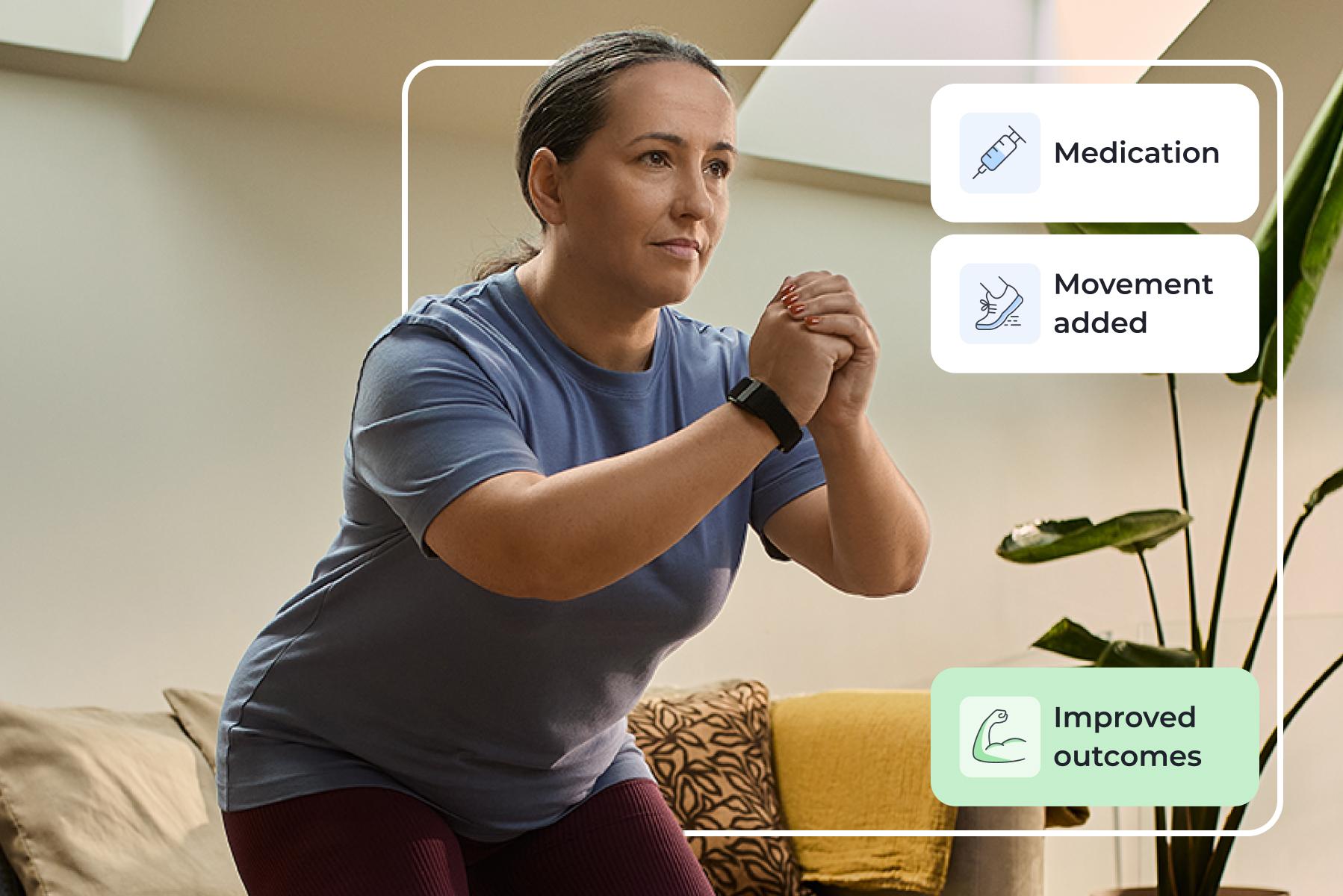
Signs your weight loss program needs muscle protection
If you are not sure whether your plan is protecting muscle, watch for these red flags:
- You are dropping pounds quickly but feeling more tired and weaker
- Your program does not include strength training or guided movement
- You are using GLP-1s without a parallel activity plan
- The scale is your only measure of success
- You regain weight after stopping treatment
Each of these signals suggests your plan may be undermining long-term health. You might be losing weight, but at the cost of strength, resilience, and stability.
5 proven tactics to help you maintain muscle and lose weight
The good news: muscle loss is not inevitable. With the right plan, you can lose fat while preserving or even improving lean muscle mass.
1. Prioritize strength-based movement
Resistance training is the single most effective way to maintain muscle during weight loss.⁷ Options include bodyweight training, resistance bands, or free weights. Aim for 2–3 sessions per week.
2. Stay active throughout the week
Do not rely on occasional workouts. Consistent daily movement stimulates metabolism, improves blood flow, and preserves strength⁸. Even moderate, structured activity makes a difference.
3. Avoid extreme calorie restriction
Aggressive diets may drive faster weight loss, but they almost always sacrifice muscle⁹. Sustainable fat loss paired with movement protects lean mass.
4. Eat enough protein
Protein is essential for muscle repair and recovery. Most experts recommend 1.2–2.0 grams of protein per kilogram of body weight per day¹⁰. Spread intake throughout the day for best results.
5. Measure more than the scale
Weight alone does not tell the full story. Track how you feel, how you move, and how your strength changes over time.
These strategies together give weight loss staying power by protecting lean tissue and building healthier habits.
Sword Move: the simple plan to build strength and keep muscle
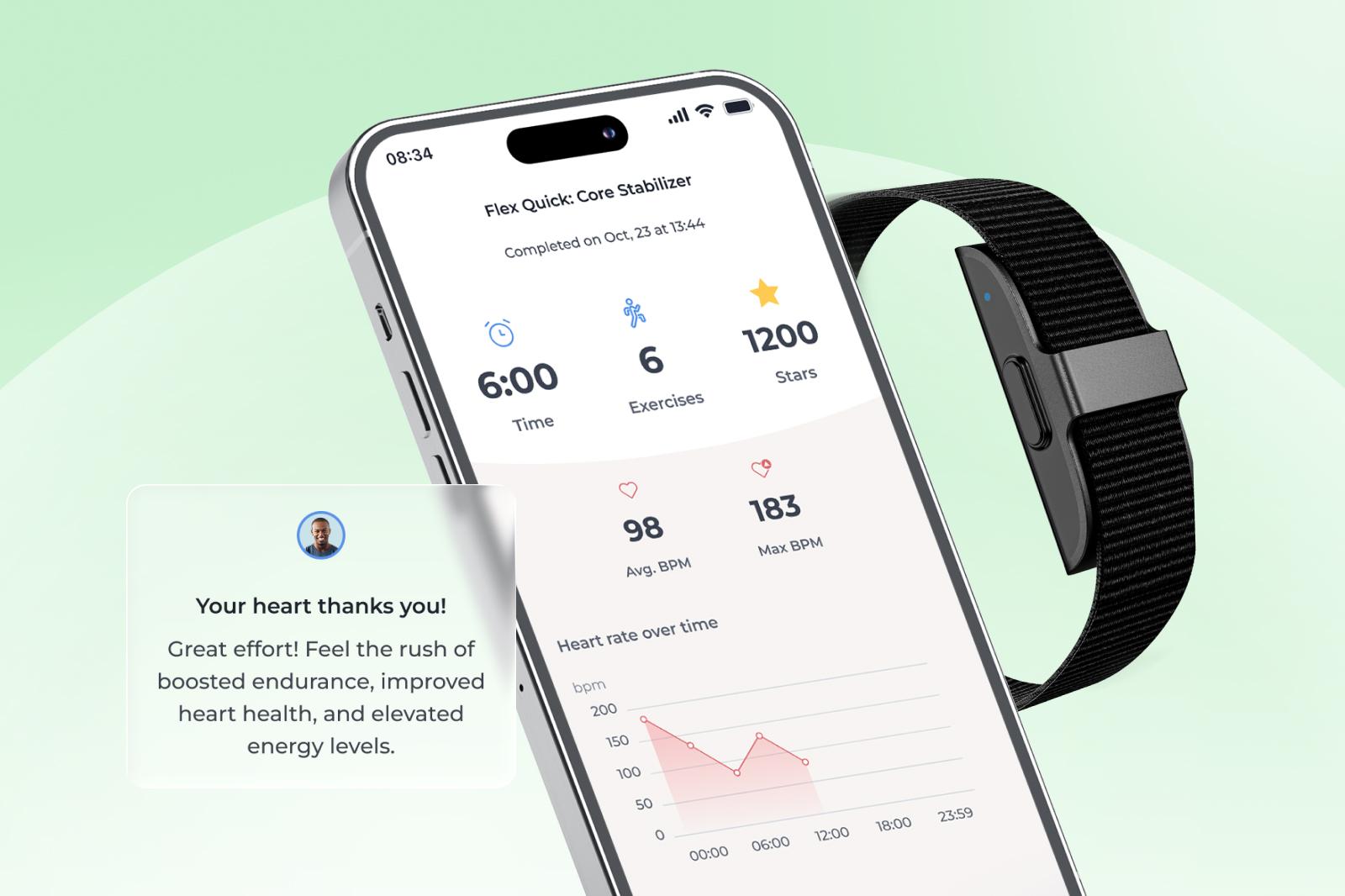
Move is Sword’s digital movement program designed to make protecting muscle simple for everyone. Unlike generic fitness apps or overwhelming gym plans, Move provides personalized, clinically-guided activity movement programs tailored to each member’s needs and goals. All Sword Move members are also matched with a dedicated Physical Health Specialist that carries a Doctor in Physical Therapy for one-on-one support.
Move members also receive a complimentary Move wearable, or Move also offers a seamless integration with Apple Watches and Fitbits. Real-time tracking means you can see progress with daily, weekly, and monthly views, displayed in the Sword app.
Clinical proof
Preventing muscle loss protects GLP-1 spend
Up to 39% of lean muscle lost with GLP-1s
Up to 39% of lean body mass is lost during GLP-1 use, increasing the risk...
Yearly cost of Sarcopenia is $900/member
Sarcopenia (lean muscle loss) contributes nearly $900 in excess healthcare costs per employee each year
69% of Move users reverse inactivity
69% of inactive and insufficiently active Move members reach active or healthy active status within 10 weeks
Move prevents MSK costs with a 3:1 ROI
Sword Move reverses physical inactivity with an independently validated 3x ROI
This combination of expert guidance and smart technology means Move members can safely and confidently build muscle-preserving activity into their daily routines. The program adapts to different lifestyles, whether someone is just starting out, returning from inactivity, or using GLP-1s as part of a weight loss plan.
You can check your eligibility now to see if Move is already included for you at no additional cost.
How Move fits into real life: fast, flexible, and accessible
One of the biggest barriers to consistent movement is finding the time. Move solves that by meeting members where they are. Sessions can be done at home, at work, or even while traveling, with no special equipment required. Most members start with just a few minutes per day. Over time, they build up strength and stamina without the need for long clinic visits or complicated routines. Weekly check-ins with a clinician keep progress on track and ensure safety.
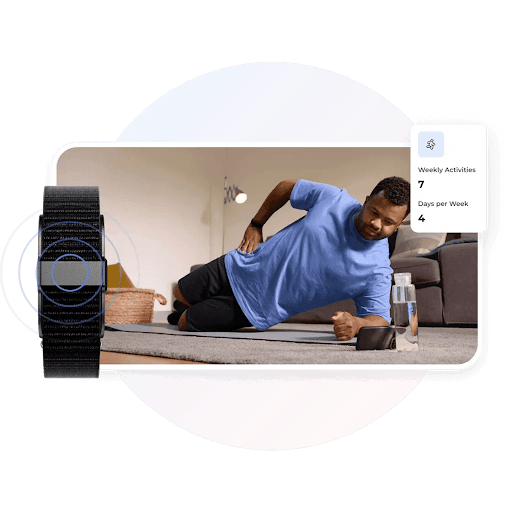
The results speak for themselves:
- 69% of inactive members became active or healthy active within 10 weeks
- Members average 4.5 guided sessions per week
- Sedentary time dropped by 1 hour and 22 minutes per day
- 91% report feeling moderately or much better¹²
This accessibility and speed of improvement make Move an ideal partner for anyone on a weight loss journey, particularly those using GLP-1s who need support to preserve muscle mass and long-term health.
Weight loss success requires more than the scale
GLP-1s and calorie restriction work well to help people lose weight, but without movement support, much of that loss can come from muscle. Muscle is your body’s engine for strength, stability, and long-term health. Protecting it is the difference between short-term results and lasting success.
Sword Move makes this possible. By embedding strength-building movement into weight loss journeys, individuals stay strong, reduce MSK risk, and sustain healthier outcomes.
About the author
Morgan Hollis
Head of Clinical Strategy, Sword Move
End pain, build strength, and prevent injury from home
Sword’s Move program may already be covered in your health plan at $0 cost to you.
Footnotes
Prado CM et al. Muscle matters: the effects of medically induced weight loss on skeletal muscle. The Lancet Diabetes & Endocrinology. 2024;12(11):785–787. https://doi.org/10.1016/S2213-8587(24)00232-7
Wolfe RR. The underappreciated role of muscle in health and disease. American Journal of Clinical Nutrition. 2006;84(3):475–482. https://doi.org/10.1093/ajcn/84.3.475
Sousa AS et al. Sarcopenia, physical activity, and MSK risk. Clin Nutr ESPEN. 2022;50:63–73.
Hall KD et al. Metabolic adaptation to weight loss. Am J Clin Nutr. 2016;104(1):90–99.
Hicks GE et al. Chronic pain and muscle loss in older adults. Pain Med. 2004;5(2):125–134.
Janssen I et al. Healthcare costs of sarcopenia in the US. Clin Interv Aging. 2017;12:517–528.
ACSM Guidelines. Resistance training for health and fitness. 2021 update.
Sword Health. MET-min analysis. 2024. Internal dataset.
Hall KD et al. Metabolic adaptation to weight loss. Am J Clin Nutr. 2016;104(1):90–99.
Phillips SM. Protein requirements and muscle preservation. J Am Coll Nutr. 2016;35(6):597–604.
Sword Health. Member reassessment data. H1 2024. Internal data.
Sword Health. PGIC scores and functional outcomes. 2023–2024. Internal data.


