



Latest articles
Fresh healthcare insights

How to reduce employer healthcare expenses
Healthcare expenses are one of the most pressing challenges for employers today. Premiums, claims, and hidden productivity losses add up quickly, and the numbers keep climbing. In 2024, family premiums for employer-sponsored coverage rose 7 percent to $25,572 on average, outpacing wage growth for yet another year.¹ For benefits leaders, this creates a difficult balance: protecting the bottom line while providing meaningful coverage for employees. Shifting more costs to employees may relieve short-term pressure, but it often backfires. When employees delay or skip care, expenses resurface in the form of higher claims, lower satisfaction, and greater turnover. The good news is that not all healthcare expenses are beyond your control. By focusing on preventative, high-value care and choosing vendor partners who guarantee results, employers can reduce spend while improving the health and experience of their people. Musculoskeletal (MSK) care is one of the clearest examples.
October 3, 2025 • 6 min read

Sword Editorial Team

How to reduce healthcare costs: 7 proven strategies for employers
Healthcare costs are climbing, and employers are feeling the strain. In 2024, average family premiums in employer-sponsored plans rose 7 percent to $25,572.¹ Behind those numbers are familiar cost drivers: chronic disease, specialty drugs, rising utilization, inefficient care delivery, and hidden but preventable MSK claims.² The good news: the trend is not inevitable. With the right plan design and vendor partnerships, employers can lower spend while improving outcomes and employee experience. This guide lays out seven proven strategies that reduce costs without cutting benefits. From smarter plan design to digital-first MSK care, you’ll see practical ways to optimize benefits, improve employee health, and get more value from every dollar spent.
October 3, 2025 • 8 min read
Sword Editorial Team

The cost of digital physical therapy vs traditional PT
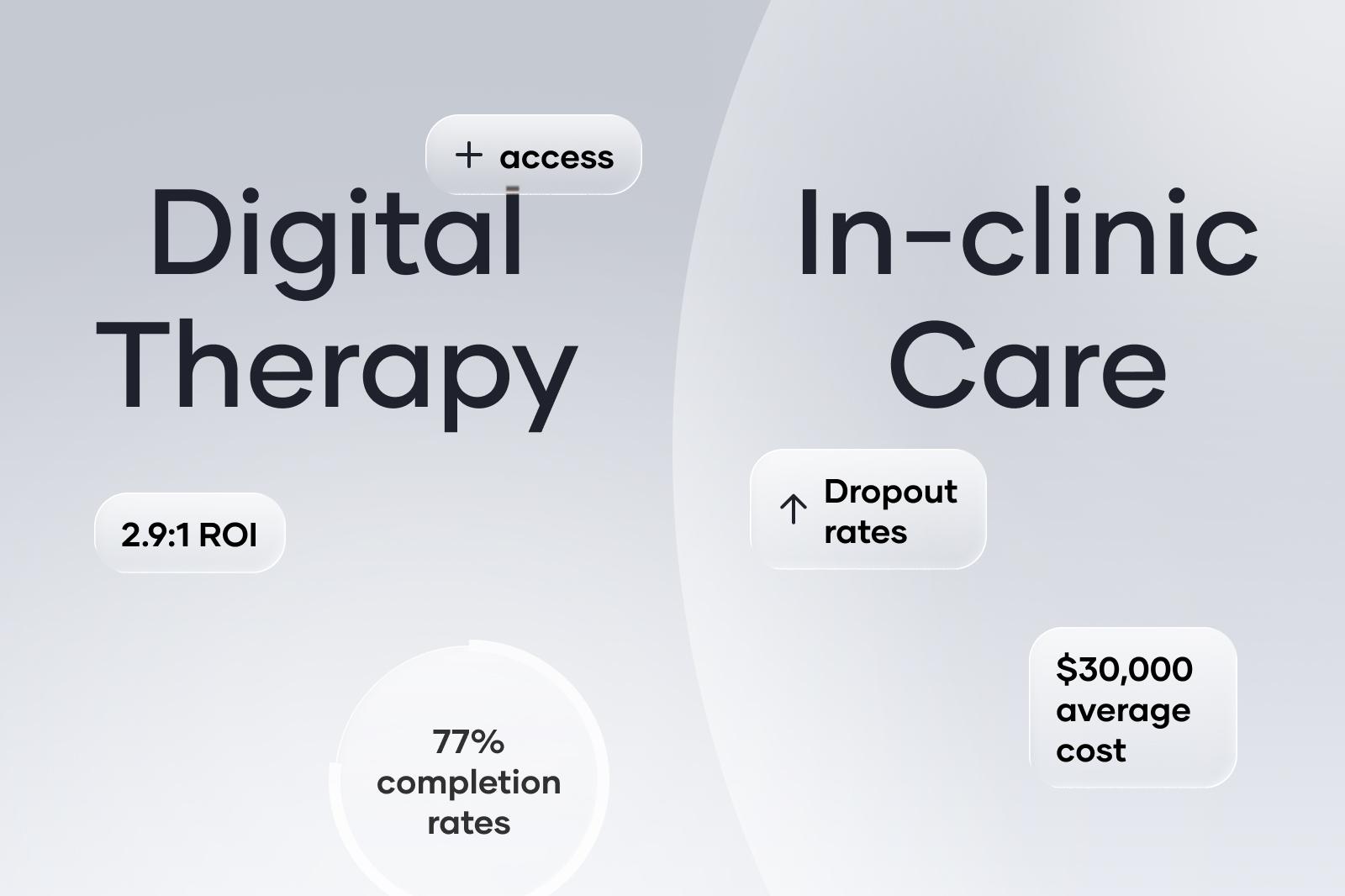
Musculoskeletal (MSK) conditions are one of the most costly categories in employer-sponsored healthcare plans, often topping claims lists year after year. Physical therapy is a recommended first-line treatment for most MSK issues, but not all physical therapy is created equal. As healthcare costs continue to rise, employers are under more and more pressure to lower healthcare spend while still improving healthcare outcomes and satisfaction levels for their employees. The balancing act can feel like a huge challenge, but thankfully more innovative and effective alternatives to traditional healthcare are emerging to solve this problem. Specifically, for MSK healthcare, the delivery model of physical therapy makes a major difference. This guide breaks down the true cost of traditional physical therapy in comparison with the costs of digital PT. You will get an understanding of what to expect and how to design an MSK plan to significantly improve both healthcare outcomes and ROI.
October 3, 2025 • 8 min read
Sword Editorial Team

Why employer health insurance costs are rising
Employer-sponsored health insurance has long been a cornerstone of U.S. healthcare. But for many employers, costs are climbing faster than ever. In recent years, premiums have surged, deductibles have grown, and benefit teams are left grappling with how to sustain competitive coverage without sinking their budgets. This article explores what’s behind the spike in employer healthcare spending, how musculoskeletal (MSK) conditions contribute disproportionately to the problem, and what practical steps benefits leaders can take to cut healthcare costs without sacrificing quality of care. Employer healthcare spending is reaching historic highs. The average employer-sponsored family health insurance premium surpassed $24,000 in 2024, with employers covering roughly $17,000 of that cost and employees responsible for the rest¹.
October 3, 2025 • 9 min read
Sword Editorial Team

Group health insurance costs: what employers should expect in 2026
Group health insurance is one of the largest expenses for U.S. employers, and it is only getting more expensive. In 2026, premiums and overall plan costs are projected to climb again1. This puts leaders in a difficult position. How can you manage spend without cutting the very benefits that employees rely on? The reality is that healthcare costs will continue to rise, but the way you respond can make the difference between unsustainable budgets and a benefits strategy that works for both your company and your people. The average annual premium for employer-sponsored health insurance is expected to surpass $9,500 for individual coverage and $23,000 for family coverage in 2025, with the rising trend expected to continue into 2026.¹ Employers typically cover 70 to 80 percent of these costs, while employees pay the rest through payroll deductions.
October 2, 2025 • 8 min read
Sword Editorial Team

The value-based care model explained
There is no single way to deliver value-based care. Instead, there are multiple models that healthcare systems, payers, and employers use to align incentives with patient outcomes. Each model shares the same principle: pay for results, not activity. They differ in how risk is shared, how performance is measured, and how payments flow. For employers and health plans trying to navigate the landscape, it helps to understand how these models work, where they succeed, and where they fall short. That context makes it clear why musculoskeletal (MSK) care, a leading driver of health spend, requires a tailored solution. Several frameworks have shaped how value-based care is implemented in U.S. healthcare:
September 29, 2025 • 7 min read
Sword Editorial Team

Female pelvic health guide
Women’s health and wellness conversations often focus on fitness, nutrition, or maternity care. Yet one crucial part of the body that impacts daily comfort, mental health, and work performance is too often overlooked: pelvic floor health. The pelvic floor is a group of muscles and tissues that support the bladder, uterus, and bowel. When these muscles weaken or stop functioning properly, women can experience a wide range of problems: urinary leaks, pelvic pain, bowel issues, sexual discomfort, or a constant sense of pressure. For years, many women have silently endured these issues, assuming they were “normal” after childbirth or aging. But pelvic dysfunction is not something to suffer through. With the right pelvic floor health program, women can reclaim comfort, confidence, and control.
September 26, 2025 • 8 min read

Jennesa Atherton

The risks of physical inactivity
We live in a world designed for sitting. From long hours at a desk to evenings spent scrolling, most adults spend the majority of their day inactive. At first, this might feel like a normal part of modern life. But the risks of physical inactivity go far beyond occasional stiffness. Inactivity is now recognized as one of the biggest contributors to preventable chronic disease, rising healthcare costs, and avoidable pain. Globally, nearly 1.8 billion adults are insufficiently active, placing them at higher risk for cardiovascular disease, type 2 diabetes, and mental ill-health¹. The good news is that the opposite is also true. Even small amounts of regular movement can unlock the powerful benefits of physical activity, improving health, boosting mood, and strengthening resilience. And with programs like Sword Move, making activity a sustainable habit has never been easier.
September 26, 2025 • 7 min read
Sword Editorial Team

What is value-based care?
Healthcare spending in the United States continues to rise, yet outcomes for many conditions, including musculoskeletal (MSK) pain, are not improving at the same pace. MSK disorders are now the top driver of healthcare costs in the U.S., accounting for more than $500 billion annually when medical spend and lost productivity are combined.¹ Employers face both direct costs and indirect costs from absenteeism and presenteeism, making MSK a growing priority for benefits teams. Despite this investment, members are too often steered toward low-value care such as unnecessary imaging and avoidable surgeries. Musculoskeletal (MSK) health is one of the biggest drivers of employee wellbeing and organizational performance, yet an estimated $90.9 billion is wasted each year on MSK interventions that provide little value.² The disconnect is structural, rooted in how healthcare is paid for by employers, health insurers, and patients themselves.
September 26, 2025 • 8 min read
Sword Editorial Team

The pelvic floor health program to free you from pain and discomfort
Women’s health and wellness conversations often focus on fitness, nutrition, or maternity care. Yet one crucial part of the body that impacts daily comfort, mental health, and work performance is too often overlooked: pelvic floor health. The pelvic floor is a group of muscles and tissues that support the bladder, uterus, and bowel. When these muscles weaken or stop functioning properly, women can experience a wide range of problems: urinary leaks, pelvic pain, bowel issues, sexual discomfort, or a constant sense of pressure. For years, many women have silently endured these issues, assuming they were “normal” after childbirth or aging. But pelvic dysfunction is not something to suffer through. With the right pelvic floor health program, women can reclaim comfort, confidence, and control.
September 26, 2025 • 8 min read
Jennesa Atherton

How to reduce absenteeism through women’s health benefits
Absenteeism drains productivity, disrupts workflows, and costs employers millions every year. For women, health-related absences often stem from conditions that remain underdiagnosed, undertreated, or unsupported by traditional benefit plans. Pelvic floor dysfunction, menopause symptoms, and maternal health issues are chief among them. Employers must go beyond offering broad wellness programs to reduce absenteeism effectively. Women in the workplace need targeted, accessible, and stigma-free support where it's needed most.
September 19, 2025 • 11 min read
Sword Editorial Team

Building a smarter women’s health strategy with digital pelvic care
Employers and health plans often describe their benefits strategy as “comprehensive,” yet one critical dimension is consistently underdeveloped: women’s health. Maternity care and parental leave policies may exist, but beyond those, most benefits portfolios leave gaps where extremely common women’s health issues are left without dedicated support. Pelvic health, menopause, and other women’s health conditions are too often overlooked. This gap is costly. One in three women in the United States will experience a pelvic health disorder in her lifetime.¹ The ripple effects extend beyond personal discomfort: absenteeism, presenteeism, increased medical claims, and talent loss from a workforce already under pressure.² For employers competing in tight labor markets, failing to meet women’s health needs is no longer an option. The opportunity is equally clear. By anchoring a women’s health strategy in digital pelvic care, organizations can create benefits that are equitable, cost-effective, and aligned with the real needs of half their workforce.
September 19, 2025 • 10 min read
Sword Editorial Team
For employers
Workplace health advice
How Digital Physical Therapy Improves Employee Retention
Did you know that fear of pain can be more disabling than pain itself? Chronic pain and employee turnover prevention are critically linked, but with the right MSK benefits coverage, employers can help their team members recover from pain to increase workplace productivity. Nearly 28% of people in the workplace will take leave for MSK pain over the course of a year. Patients who suffer the two most common conditions of low back and neck pain have an average return to work of 7 days. Overall, MSK conditions are responsible for 44 missed work days each year on average.
October 24, 2025 • 5 min read
Sword Editorial Team
How to evaluate and select the best digital MSK vendors
Musculoskeletal (MSK) disorders are one of the most expensive and under-addressed cost centers facing U.S. healthcare providers. MSK disorders affect 1 in 2 Americans and cost over $190 billion per year, more than heart disease, cancer, or mental health conditions. For employers and health plans, MSK claims are often among the top 3 cost drivers. And for members, chronic pain reduces quality of life, drives absenteeism, and often leads to costly downstream interventions. That’s why digital MSK solutions have surged in popularity. The promise is compelling: better access, which drives stronger engagement, delivers better outcomes, and therefore lowers overall healthcare costs.
October 24, 2025 • 6 min read
Sword Editorial Team
Reduce MSK costs with more effective digital MSK care plans
You’ve likely seen numerous digital health solutions that promise to lower medical spend. You’ve probably zeroed in on the top conditions with significant digital solutions in the marketplace: musculoskeletal (MSK), mental health, and diabetes. For most companies, prioritizing MSK care over other digital health solutions will drive the biggest benefits for your employees and your bottom line when it comes to savings. Given the multitude of vendors, platforms, and solutions available, prioritization can be a daunting task. How do you choose from among the thousands of digital health tools? What combination of condition focus and solution selection will drive the best outcomes for your population and the biggest return for your business?
October 24, 2025 • 5 min read
Sword Editorial Team
Tackling the #1 driver of employers’ health costs: MSK
The phrase ‘musculoskeletal disorder’ may not ring a bell — but the feeling might. The term refers to any type of pain in the muscles or joints, from chronic pain to injuries to post-surgical pain. Many of us have suffered from a musculoskeletal (MSK) issue at some point in our lives. In fact, one in two Americans is struggling with an MSK condition right now. And it’s causing economic ripples, especially in the workplace.
January 20, 2020 • 6 min read
Sword Editorial Team
Expert guidance
From the experts: Ask a physical therapist

Ask a PT: when is the best time to do my exercises?
Before I joined Sword Health, I worked in brick-and-mortar clinics. I never worked weekends, and rarely worked past 6 pm. My schedule was great...for me. But for my patients, it was a real challenge. Attending a physical therapy appointment might require leaving work early or slipping out at lunch. Even patients with more flexible schedules would sometimes lament about finding childcare or arranging transportation. A thirty-minute appointment could easily take an hour or even 90 minutes once travel was taken into account. When I was in a clinic, the “best” time for a patient to do their exercises was the time that worked for me, not for them. Sword's virtual model gives our members the power to do their exercises when AND where it's most convenient for them. Now that I work remotely for Sword, I’m able to help our members figure out the best time to do their exercises at home. Now, when my members ask me when they should do their exercises, I tell them - the best time is when you’ll actually do them!
February 11, 2021 • 6 min read

Megan Hill

Ask a PT: Does walking really help with pain?
If you’ve ever stood on the sidelines of a sporting event, you’ve likely witnessed many falls, trips and tackles. Whether the players are small children or professional athletes, the advice from the coach may have simply been to “walk it off.” While that is not always the best solution after an acute injury, walking can be a really effective way to manage chronic pain. Motion is lotion. Movement increases blood flow, which brings nutrients to our tissues. It also helps those that don’t have blood flow, like cartilage. Cartilage lines our joints, absorbing impact. It’s surrounded by a liquid which provides it with nutrients, flowing in and out of it like a sponge. Exercise, like walking, causes loading that fills and squeezes that sponge, particularly in the joints of our legs and spine.
August 13, 2020 • 4 min read
Megan Hill

Ask a PT: What Is Causing My Shoulder Pain?
When your shoulder hurts, it can be difficult to tell exactly what’s gone wrong. You’ve probably heard of pinched nerves and rotator cuff tears. Perhaps you’ve also heard about shoulders being ‘impinged’ or ‘frozen.’ It’s not easy to keep these various shoulder conditions straight, especially when they all cause similar pain symptoms. The first step towards fixing a problem is identifying it. This article, written by a team of Doctors of Physical Therapy, is designed to help you figure out what’s causing your shoulder pain — so you can begin the process of healing it. We will dive into the five most common causes of shoulder pain and how to differentiate them. Cervical refers to the neck, and radiculopathy is pain that radiates to another body part. Hence, cervical radiculopathy: a pinched nerve in the neck, which can cause radiating pain affecting the shoulder. It occurs when the cervical spine becomes damaged due to sudden injury or degeneration over time, and squeezes or puts pressure on a nearby nerve.
November 1, 2023 • 6 min read
Megan Hill
Healthcare contributors
Meet Sword's expert authors

Vijay Yanamadala
Chief Medical Officer at Sword Health

Fernando Correia
SVP Clinical & Regulatory Affairs at Sword Health
Megan Hill
Director, Clinical Specialists

Morgan Hollis
Head of Clinical Strategy, Sword Move
Jennesa Atherton
Head of Clinical Affairs, Sword Bloom

Liz Santo
Senior Clinical Program Manager, Sword Bloom ·


